
2026 Patsy Robertson Memorial Lecture Highlights Climate Finance Gaps Ahead of COP31
By T. Vishnudatta Jayaraman, South Asian Herald
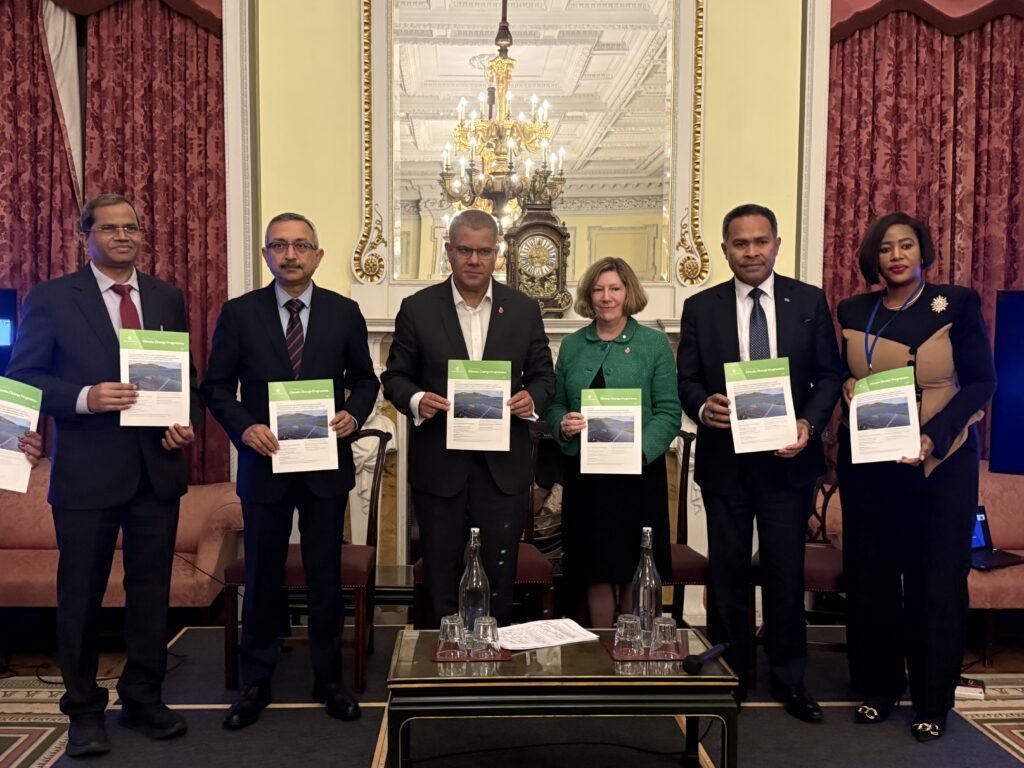
Commonwealth Secretariat, London: International climate leadership and the need to expand financing for developing countries was the focus at the 2026 Patsy Robertson Memorial Lecture, held October 27 at Marlborough House.
The event, titled “Climate Action, International Leadership and the Commonwealth,” was jointly hosted by the Commonwealth Association, the Commonwealth Human Ecology Council, and the Commonwealth Secretariat’s Climate Change and Oceans Directorate. Speakers examined the challenges facing global climate cooperation and ways to channel more investment toward countries most vulnerable to climate change.
Welcoming guests, Commonwealth Association Chair Max Gaylard paid tribute to Robertson’s role in establishing the association and her legacy as a “fierce” advocate for justice.
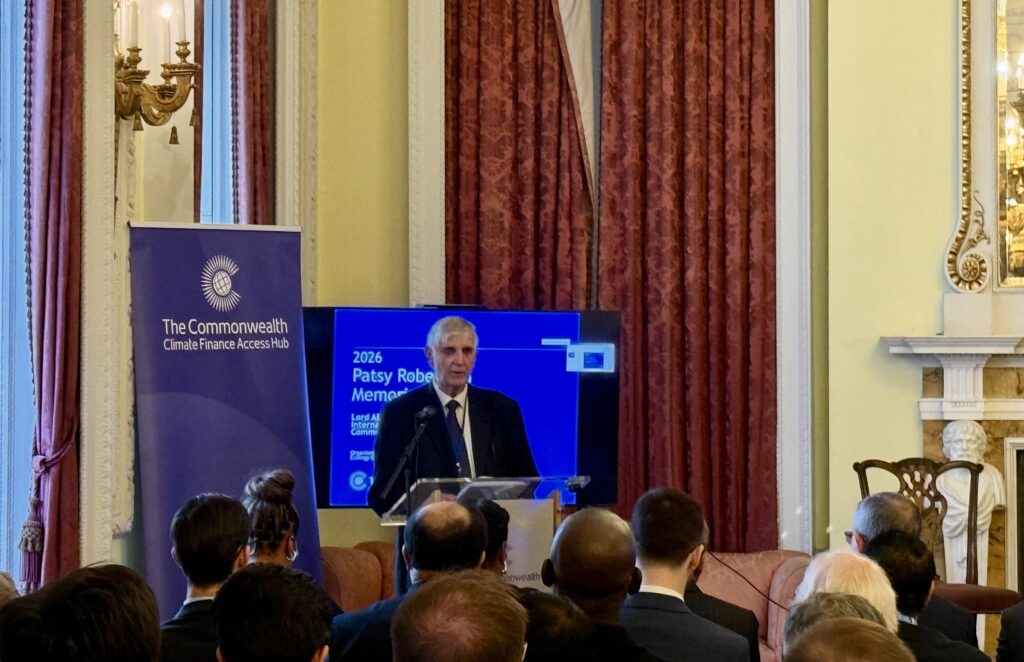
“She was a remarkable woman, full of energy and passion, and with a lifelong commitment to the Commonwealth. She will be remembered as the Commonwealth’s spokesperson at successive Commonwealth summits,” Gaylard said. “And in particular, she became a highly distinctive voice in the Commonwealth’s long campaign against apartheid in South Africa.”

Tanmaya Lal, the Commonwealth Secretariat’s deputy secretary-general for programs, said Robertson remained warmly remembered for her distinguished service to the organization over several decades.
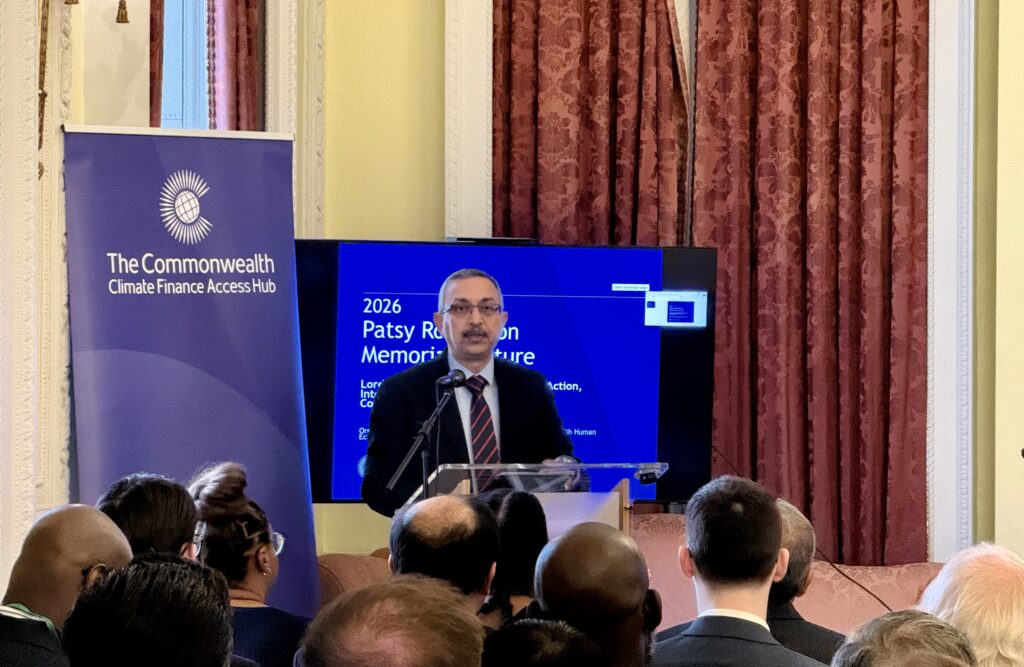
“We celebrate her legacy and draw inspiration from her leadership,” Lal said. “The theme of today’s deliberations focuses on one of the most serious and complex global challenges of our times, and the role of international leadership in securing the multilateral collaboration that is needed to address it. It also speaks to what the Commonwealth has done and can do to contribute to climate action.”
Lal said geopolitical uncertainty was weakening confidence in multilateral cooperation as negotiators prepared for COP31, the next United Nations climate conference. Discussions would examine countries’ nationally determined contributions, or NDCs, alongside progress on technology cooperation and climate finance.
Tracing the Commonwealth’s involvement in climate diplomacy, Lal recalled concerns raised by the South Pacific Forum in the late 1980s and the adoption of the Langkawi Declaration in 1989. Those efforts, he said, helped build momentum toward negotiations on the United Nations Framework Convention on Climate Change.
He noted that five Commonwealth members, Canada, India, Kenya, South Africa, and the United Kingdom, had hosted previous climate COPs. He also highlighted the roles of Fiji and Tuvalu in hosting this year’s pre-COP and Australia in leading the COP31 negotiations.
Delivering the memorial lecture, Lord Alok Sharma, a member of the UK Parliament who has held several ministerial positions, paid tribute to Robertson’s advocacy for justice, equality, and freedom.
“Indeed, I think I’d go as far as to say that she’s regarded as a legendary figure in the Commonwealth family,” he said.
Sharma, who served as president of COP26 in Glasgow in 2021, recalled the difficulties facing the UK’s climate leadership, including the COVID-19 pandemic and geopolitical tensions during its presidency. Despite those challenges, he said, nearly 200 countries agreed to the Glasgow Climate Pact.
He outlined the commitments secured around the summit, including a substantial expansion in net-zero targets. When the UK took on responsibility for organizing COP26, less than 30 per cent of the global economy was covered by such a target, he said. By the summit, that figure had surpassed 90 per cent, with nearly every major emitter making a commitment.
Those pledges were accompanied by more ambitious near-term emissions reduction targets and additional adaptation funding, Sharma said. He also cited commitments involving $130 trillion in private finance to support the transition toward a lower-carbon global economy.
“For the very first time in 26 years of these meetings, we got language on fossil fuels into the text with a commitment to phase down the use of coal,” he said.
Sharma attributed the willingness of governments and businesses to make commitments in Glasgow to a recognition of shared economic and environmental interests.
“I believe it was collective self-interest. Frankly, they understood the science,” he said. “They could see the negative impact of climate change on lives, livelihoods, and infrastructure in each of their own countries, and they understood that the cost of inaction was going to be far, far greater than the cost of taking action now to tackle climate change.”
Investment in clean energy, transportation, and technology also offered opportunities for job creation, inward investment, exports, and economic growth, he said. Cleaner air and water, along with improved public health, strengthened the case for action.
Sharma warned that exceeding the Paris Agreement’s temperature limits was becoming increasingly difficult to avoid without faster implementation across sectors.
Turning to the United States, he said the reduced federal emphasis on climate action carried significant consequences because of the country’s position as the world’s second-largest emitter.
“But it’s also worth pointing out that the Trump administration does not represent the whole of U.S. public opinion when it comes to climate,” he said.
Sharma cited the U.S. Climate Alliance, whose member states account for about 60 per cent of the U.S. economy, as evidence of continued commitment to climate action below the federal level.
He also pointed to Texas, arguing that employment and investment considerations continued to support renewable energy development in Republican-led states. Texas ranked first among U.S. states in combined wind, solar, and battery storage capacity, he said.
Corporate commitments provided another indication of continued activity, Sharma added. More than 80 per cent of S&P 500 companies had disclosed a formal climate target, he said, while a review published the previous month found that more than 80 per cent of U.S. executives considered decarbonization a core operational priority despite political uncertainty.
At the same time, he said, many companies had become less vocal about their efforts, a practice often called “greenhushing.” Businesses were continuing to reduce emissions while emphasizing efficiency and cost savings instead of using terms such as environmental, social, and governance, net zero, or climate.
Sharma also drew attention to disparities in the distribution of global climate investment. More than 80 per cent of the $2.3 trillion invested in decarbonizing the global economy the previous year went to China, India, Europe, and the United States, he said. Less than 3 per cent reached least developed countries.
The Commonwealth includes 14 least developed countries, he noted, arguing that they were receiving an insufficient share of funding to support their transitions.
As an example of how developed countries could help expand financing, Sharma recalled the UK’s India Green Guarantee, announced during COP26 to support India’s transition to a low-carbon economy.
Under the initiative, he said, the UK government provided a guarantee for a $1 billion World Bank sovereign loan to India. Because the guarantee was structured as a contingent liability, it did not require an upfront financial outlay from the UK government, he explained.
“What we need is more kind of initiatives like these from developed countries to support emerging economies, to support Commonwealth nations on the front line of climate change,” Sharma said.
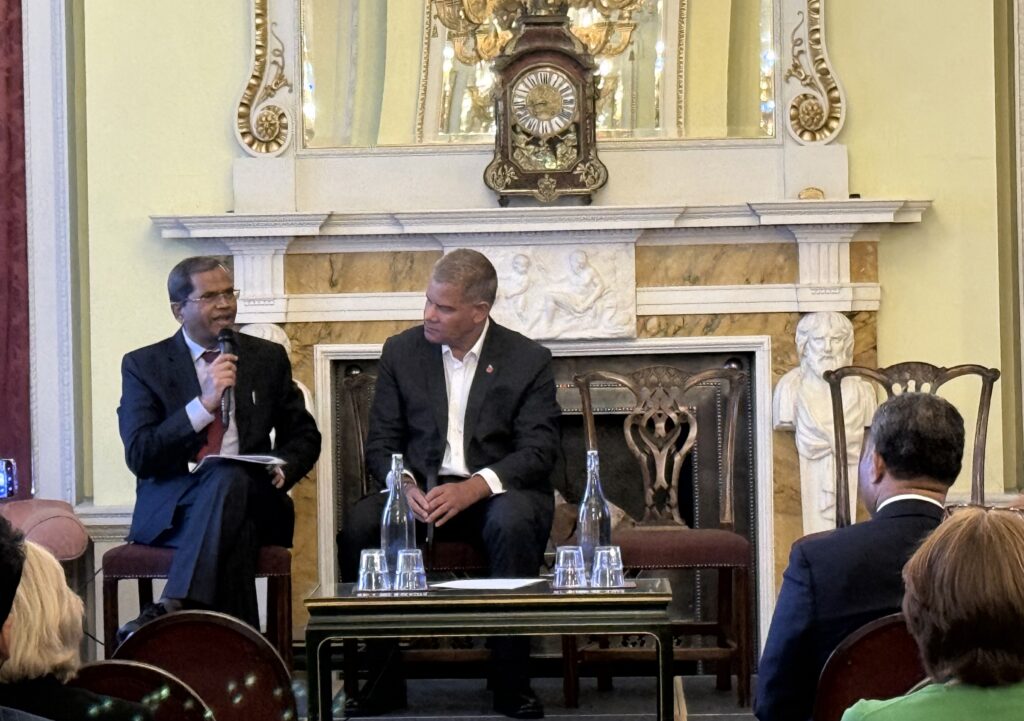
Suresh Yadav, senior director of the Commonwealth Secretariat’s Climate Change and Oceans Directorate, moderated a discussion with Sharma and a separate panel featuring Fiji’s high commissioner, Jovilisi Suveinakama; Australia’s deputy high commissioner, Elisabeth Bowes; and Korankyewa Adja-Kwesi, minister-counselor for political and economic affairs at the Ghana High Commission.
The panel considered ways to strengthen regional participation in climate negotiations and secure financing ahead of COP31 in Antalya, Türkiye.
Fiji High Commissioner Suveinakama questioned whether current global leadership and multilateral institutions were adequately addressing climate change, pointing to the continuing challenges facing Pacific nations.
Invoking the saying that beauty is in the eye of the beholder, he questioned how leadership is judged within the international rules-based order. He distinguished between leadership considered right and leadership that delivers positive outcomes, asking whether existing approaches would serve future generations.
“And then, apart from the challenges that we have with the international rules-based order, there is actually the issue of multilateralism,” he said.
Suveinakama also raised questions about the standards ordinary people rely on to distinguish good leadership from poor leadership and right decisions from wrong ones. Climate change, he said, puts those judgments into sharp focus.
“As we look at climate change, we ask ourselves: Is this the right kind of leadership that we have today? Is this meant to be good for our future?” he said.
He thanked Australia for providing an opportunity for Pacific island nations, small island developing states and least developed countries to come together and help shape a pathway toward outcomes at COP31.
Australia’s Deputy High Commissioner Bowes said the discussion came at a timely moment ahead of the 2026 Commonwealth Heads of Government Meeting (CHOGM), scheduled for the following week. She emphasized the Commonwealth’s role as a forum for addressing shared challenges among its 56 diverse member nations.
From Australia’s perspective, a central priority was elevating Pacific voices and drawing greater attention to the region’s climate challenges, she said. The pre-COP event hosted by Fiji and Tuvalu aimed to give the international community direct exposure to those conditions.
“One of the aims was really to bring the world to the Pacific to see firsthand what the impacts of climate change are,” Bowes said.
She pointed to rising sea levels and difficulties accessing finance as issues confronting small developing states. Bringing participants to the region, she said, offered an opportunity to better understand how these pressures affect Pacific communities.
“Now, these are not unique to the Pacific, but the Pacific is a very clear example of these challenges,” she said.
Bowes added that the Commonwealth connection underscored how widely those concerns are shared. Coastal states across the organization face similar pressures, she said, including countries in the Caribbean, which was preparing to host CHOGM, and in Africa.
Ghana’s Minister-Counselor Adja-Kwesi said her country was chairing the African negotiating group for the first time since signing the United Nations Framework Convention on Climate Change in 1992. She emphasized Ghana’s longstanding commitment to justice and reform, particularly in climate action.
As Ghana approached the pre-COP negotiations, she said, its responsibilities extended beyond its national interests to those of the African continent.
“Whenever we are doing anything, it’s not just for Ghana; it’s for the entire African continent,” she said.
Comparing responses that address symptoms without tackling their causes to repeatedly administering painkillers, Adja-Kwesi called for greater attention to the underlying pressures facing African communities.
“For us, we see climate change and the impact on Africans as one of the underlying factors for which many young Africans are moving out of the continent to seek greener pastures, and so we come into the climate negotiations having a rather broad picture, from the economic situation in Africa right down to climate,” she said.
Uzoamaka Nwamarah, head of climate change, delivered the vote of thanks, and Gaylard offered closing remarks. Shevon Campbell-Roberts, climate research and policy officer in the Climate Change and Oceans Directorate, welcomed participants at the start of the event.
Reproduced with permission from the South Asian Herald, to whom we offer our thanks.
Commonwealth Association sponsors inaugural Patsy Robertson Award for Outstanding Communications Skills

In the annual CYP Awards the Commonwealth Association sponsored the inaugural Patsy Robertson Award for Outstanding Communications Skills. The new category was created to honour the legacy of the late Patsy Robertson, a former Director of Communications at the Commonwealth Secretariat.
Maria Maina from Kenya clinched the Patsy Robertson Award for her work in advancing gender equality through Social Justice Insights, a digital platform using research, advocacy and storytelling to educate young people on gender-based violence, femicide and women’s rights.
Maria received a cash prize of £1,000, a certificate and a trophy while five other candidates were recognised as finalists.
Each finalist in this category will also receive a complimentary membership in the Commonwealth Journalists Association, granting them access to a global network of journalists and a range of professional development opportunities.
Copyright © 2026 | MH Purity lite WordPress Theme by MH Themes